
Technical SEO Checklist is one of the first things every small business should focus on before investing time and money in SEO. If your website has technical issues, even great content may struggle to rank on Google.
Many small businesses spend time writing blogs, updating service pages, and posting on social media. That’s all useful. But if search engines struggle to crawl or understand your website, those efforts won’t deliver the results you expect.
The good news? You don’t need a massive budget to fix most technical SEO issues.
Let’s go through a practical checklist that every small business in India should follow.
What Is Technical SEO?
Technical SEO is the process of improving your website so search engines can crawl, index, and understand it without problems.
Think of it like building a house.
Your content is the furniture. Technical SEO is the foundation. If the foundation has cracks, the rest of the house suffers.
The goal isn’t to impress Google with tricks.
It’s to make your website easy to access, fast to load, and simple to understand.
Start With Website Speed
Nobody likes waiting for a slow website.
Neither do search engines.
A slow website often leads to:
- Higher bounce rates
- Lower user engagement
- Fewer enquiries
- Reduced search visibility
You can improve loading speed by:
- Compressing images
- Using modern image formats
- Removing unnecessary plugins
- Enabling browser caching
- Choosing reliable hosting
Even saving one or two seconds can make a noticeable difference.
Make Sure Your Website Works on Mobile
Most visitors in India browse websites using their phones.
If your site looks broken on smaller screens, people won’t stay for long.
Check that:
- Text is easy to read
- Buttons are easy to tap
- Images resize correctly
- Menus work properly
- Pages load quickly on mobile data
Google mainly evaluates the mobile version of your website, so this step matters.
Use HTTPS
Visitors expect websites to be secure.
HTTPS encrypts data and helps protect users.
If your website still shows “Not Secure” in the browser, fix it as soon as possible.
Most hosting companies provide SSL certificates that are simple to install.
Fix Broken Links
Broken links create a poor experience.
Imagine clicking a page only to find an error message.
It doesn’t inspire confidence.
Review your website regularly and fix:
- 404 pages
- Broken internal links
- Outdated external links
- Incorrect redirects
Small fixes like these help both users and search engines.
Create a Clear Website Structure
A confusing website makes it difficult for visitors to find information.
Keep your navigation simple.
For example:
- Home
- About
- Services
- Blog
- Contact
Every important page should be reachable within a few clicks.
Good structure also helps search engines understand how your pages relate to each other.
Submit an XML Sitemap
An XML sitemap acts like a roadmap for search engines.
It lists your important pages and helps Google discover new content faster.
After creating your sitemap, submit it through Google Search Console.
This takes only a few minutes.
Check Your Robots.txt File
The robots.txt file tells search engines which pages they can crawl.
Sometimes important pages are blocked by mistake.
Review this file carefully to make sure valuable content isn’t hidden from search engines.
Improve Internal Linking
Internal links connect related pages on your website.
For example, if you write about local SEO, you can naturally link to another article about keyword research.
Internal linking helps:
- Users discover more content
- Search engines understand page relationships
- Important pages gain more visibility
Don’t overdo it.
Only add links where they make sense.
Write Unique Title Tags and Meta Descriptions
Every page should have its own title and description.
Avoid using the same title across multiple pages.
Your titles should explain the page clearly.
Meta descriptions should encourage people to click without sounding forced.
Clear information usually performs better than exaggerated promises.
Optimise Images
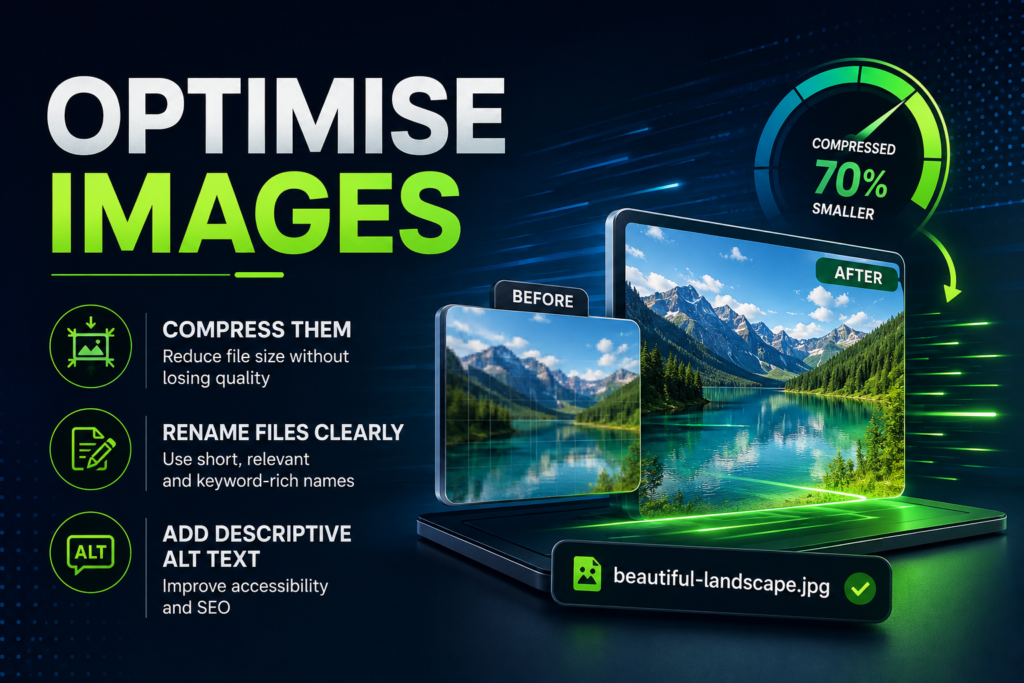
Large image files slow down websites.
Before uploading images:
- Compress them
- Rename files clearly
- Add descriptive alt text
Alt text also improves accessibility for users who rely on screen readers.
Remove Duplicate Content
Duplicate content can confuse search engines.
Review your website for:
- Similar service pages
- Repeated blog content
- Duplicate product descriptions
If pages cover the same topic, consider merging or rewriting them.
Quality matters more than quantity.
Track Technical Issues Regularly
Technical SEO isn’t something you complete once and forget.
Websites change over time.
New pages are added.
Plugins get updated.
Errors appear unexpectedly.
Check your website regularly using tools such as Google Search Console to spot indexing problems, mobile usability issues, and crawl errors before they affect your rankings.
Build Trust Through Your Website
People don’t only judge your business by your products or services.
They also judge your website.
Include information that helps visitors trust you.
For example:
- Contact details
- Business address
- Privacy Policy
- Terms and Conditions
- About page
- Customer testimonials
These pages help users understand that your business is genuine.
Work With SEO Experts When Needed
Some technical issues are easy to fix.
Others require deeper knowledge.
If your website has crawl problems, indexing issues, Core Web Vitals errors, or technical audits that seem overwhelming, getting professional help can save time and prevent costly mistakes.
At Advexity, we help businesses identify technical SEO problems, improve website performance, and build websites that are easier for both users and search engines to navigate. Our experience across different industries allows us to recommend practical solutions based on real business goals rather than one-size-fits-all advice.
Whether you’re launching a new website or improving an existing one, having the right technical foundation makes every future SEO effort more effective.
Businesses searching for a reliable Technical SEO checklist and guidance from an experienced Seo Company in Nagpur often benefit from addressing these technical issues before investing heavily in content or advertising.
Final Thoughts
Technical SEO isn’t about making complicated changes.
It’s about removing the barriers that stop search engines and visitors from using your website properly.
Start with the basics.
Improve your speed.
Fix broken pages.
Make your site mobile-friendly.
Keep monitoring your website every month.
Small improvements made consistently can have a lasting impact on your search visibility and user experience. A strong technical foundation gives every blog post, service page, and future SEO effort a much better chance of succeeding.