
SEO vs. Google Ads: Which Is Better for Business Growth? If you’re trying to grow your business online in 2026, you’ve probably asked yourself one question. Should you invest in SEO or Google Ads? It’s a fair question. Both can bring visitors to your website. Both can generate leads. Both can increase sales. But they work in very different ways. Some businesses see great results from SEO. Others get faster wins with Google Ads. And many businesses actually benefit from using both together.
So, how do you decide? This guide breaks down the differences between SEO and Google Ads in simple words. You’ll learn how each one works, where it performs best, and how to choose the right option based on your goals and budget.
What Is SEO?
SEO stands for Search Engine Optimization. It’s the process of improving your website so it appears higher in Google’s organic search results. You don’t pay Google every time someone clicks your website. Instead, you earn those rankings by creating useful content, improving your website, and building trust over time.
For example, imagine you own a bakery in Nagpur. If someone searches for “best bakery in Nagpur” and your website appears on the first page without an advertisement, that’s SEO at work.
SEO usually includes:
- Keyword research
- High-quality content
- On-page SEO
- Technical SEO
- Local SEO
- Link building
- Improving website speed
- Better user experience
SEO takes time. But once your pages start ranking, they can bring traffic for months or even years.
What Are Google Ads?
Google Ads is Google’s paid advertising platform. Instead of waiting for rankings, you pay to appear at the top of search results. Every time someone clicks your ad, you pay a certain amount. This is called Pay-Per-Click (PPC). Let’s use the bakery example again. If you run a Google Ads campaign for “birthday cake delivery near me,” your ad can appear above the organic search results almost immediately. That’s why businesses often use Google Ads when they need quick traffic.
Google Ads allows you to:
- Reach customers instantly
- Target specific keywords
- Show ads in selected locations
- Control your daily budget
- Measure every click and conversion
If your campaign is managed well, it can start generating leads within hours.
SEO vs Google Ads: The Main Difference
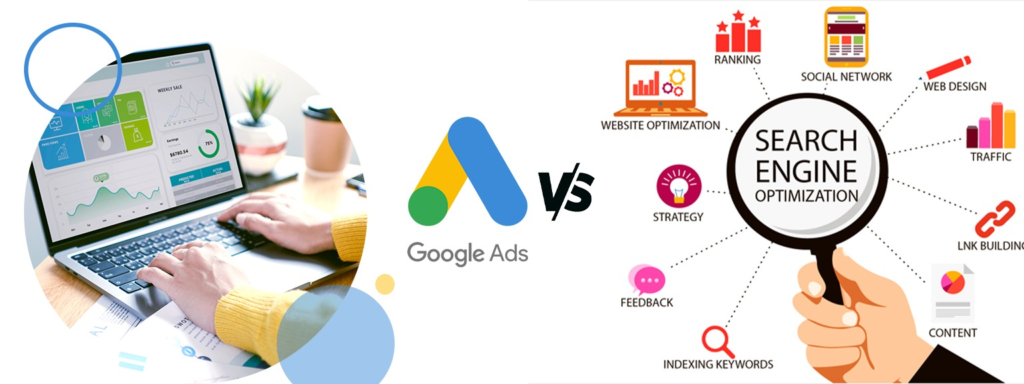
The biggest difference is simple. SEO earns traffic. Google Ads buys traffic. SEO needs patience. Google Ads delivers faster visibility.
Here’s a quick comparison.
| Feature | SEO | Google Ads |
|---|---|---|
| Cost per click | Free | Paid |
| Results | Long-term | Immediate |
| Traffic | Organic | Paid |
| Trust level | Higher | Moderate |
| Budget required | Flexible | Daily budget needed |
| Long-term value | High | Stops when ads stop |
| Best for | Sustainable growth | Quick leads |
How SEO Works
Google wants to show users the most useful pages. So, when your website answers people’s questions better than your competitors, Google is more likely to rank your content.
It looks at many signals, including:
- Content quality
- Website speed
- Mobile friendliness
- User experience
- Backlinks
- Search intent
- Page structure
Think about your own searches. Do you usually click the first result? Most people do. That’s why ranking higher matters so much.
How Google Ads Works
Google Ads is based on an auction. Businesses bid on keywords. But money isn’t the only factor.
Google also checks:
- Ad quality
- Landing page experience
- Expected click-through rate
- Keyword relevance
This means a business with better ads can sometimes pay less than a competitor. That’s something many people don’t realize.
Benefits of SEO
SEO is one of the best long-term investments for a business. Here’s why.
You Don’t Pay for Every Click
Once your pages rank, people can visit your website without you paying Google for each click. That’s a big advantage if you’re thinking long term.
Builds Trust
Many users skip advertisements. They prefer clicking organic search results because they see them as more trustworthy. Trust matters, especially for service businesses.
Generates Long-Term Traffic
A well-written blog can continue bringing visitors months after it’s published. Some articles even generate traffic for years with regular updates.
Better Return Over Time
SEO may take several months before showing strong results. But after that, your cost per lead often becomes much lower than paid advertising.
Improves User Experience
SEO isn’t only about keywords. It also encourages businesses to improve:
- Website speed
- Navigation
- Mobile experience
- Content quality
Your visitors benefit too.
Benefits of Google Ads
Google Ads offers something SEO can’t.
Speed.
Instant Visibility
Your ads can appear on Google within a few hours after approval.
That’s useful if you’re launching:
- A new product
- A seasonal offer
- A local event
- A limited-time discount
Highly Targeted
You can target users based on:
- Location
- Age
- Device
- Language
- Time of day
- Search keywords
This makes campaigns much more focused.
Easy to Measure
Google Ads provides detailed reports.
You can see:
- Clicks
- Impressions
- Cost
- Conversions
- Revenue
- Return on ad spend
Everything is measurable.
Flexible Budget
You don’t need a huge advertising budget.
Many businesses start with small daily budgets and increase spending once campaigns perform well.
SEO vs Google Ads: Which Costs Less?
This depends on how you measure cost.
SEO usually requires investment in:
- Content writing
- Technical improvements
- SEO tools
- Link building
Google Ads requires continuous advertising spend. Once you stop paying, your traffic stops too. SEO continues bringing visitors after the work is done. So while SEO takes more patience, it often becomes more affordable over time.
Which Gives Faster Results?
Google Ads wins here.
There’s no debate.
SEO can take:
- Three months
- Six months
- Sometimes even longer
Google Ads can generate leads the same day. If speed matters most, paid advertising is usually the better choice.
Which Builds More Trust?
SEO.
Think about your own behavior. When you search on Google, do you trust the advertisement more? Or the first organic result? Many people naturally trust websites that earned their rankings. That’s one reason SEO remains valuable even in 2026.
SEO vs Google Ads for Small Businesses
Small businesses often have limited budgets. That makes choosing even more important.
SEO works well if you want:
- Steady growth
- Long-term traffic
- Brand awareness
- Lower cost per lead over time
Google Ads works well if you need:
- Immediate enquiries
- Fast sales
- Product launches
- Local lead generation
Many local businesses actually combine both.
They use Google Ads for quick enquiries while building SEO in the background.
SEO vs Google Ads for Local Businesses
Local businesses should never ignore local SEO.
Google Business Profile, customer reviews, and local keywords can generate valuable traffic.
Examples include:
- Dentist near me
- Gym in Nagpur
- Digital marketing agency in Pune
- Best salon nearby
Local SEO helps businesses appear in Maps and local search results.
Google Ads can also target nearby customers.
Using both often produces better results.
Common SEO Mistakes
Many businesses struggle because they make simple mistakes.
Some common ones include:
- Publishing thin content
- Ignoring search intent
- Stuffing keywords
- Slow website speed
- Poor mobile experience
- Broken links
- Duplicate pages
Fixing these issues often improves rankings.
Common Google Ads Mistakes
Paid advertising isn’t just about creating an advertisement.
Businesses often waste money because they:
- Target broad keywords
- Ignore negative keywords
- Send visitors to poor landing pages
- Don’t track conversions
- Write weak ad copy
- Never test different ads
Even small improvements can reduce advertising costs.
Can SEO and Google Ads Work Together?
Yes.
In fact, they complement each other.
Imagine this.
You run Google Ads for immediate traffic.
At the same time, your SEO strategy builds organic rankings.
Over several months:
- Paid leads continue coming.
- Organic traffic increases.
- Brand awareness grows.
- Customer trust improves.
This balanced approach reduces dependence on one channel. Many successful businesses follow this strategy.
Which Is Better for Different Business Goals?
If you need leads quickly
Choose Google Ads.
If you want long-term growth
Choose SEO.
If you’re launching a new business
Google Ads can help people discover you while your SEO grows.
If your budget is limited
SEO usually provides better value over time.
If you’re in a competitive industry
Using both often produces stronger results.
SEO Trends in 2026
Search engines continue changing.
Businesses should focus on:
- Helpful content written for real people
- Fast websites
- Mobile-first experience
- AI-assisted search
- Voice search
- Local SEO
- User experience
- Topical authority
Google keeps rewarding websites that genuinely help users. Trying shortcuts rarely works for long.
Google Ads Trends in 2026
Google Ads is also changing. Businesses are using:
- AI-powered bidding
- Performance Max campaigns
- Better audience targeting
- First-party data
- Improved conversion tracking
- Video advertisements
Automation is increasing. But human strategy still matters.
Google wants to recommend websites people can trust. That’s where EEAT comes in.
EEAT stands for:
- Experience
- Expertise
- Authoritativeness
- Trustworthiness
Let’s break it down.
Experience
Google values content written by people who have real-world experience. If you’ve managed SEO campaigns or Google Ads accounts, sharing those lessons adds credibility. Real examples often help readers more than generic advice.
Expertise
Your content should answer questions clearly and accurately. Don’t write only to include keywords. Write because you understand the topic.
Authoritativeness
Authority grows when your website consistently publishes useful content. Other websites linking to your articles also strengthen authority.
Trustworthiness
Trust is built through:
- Accurate information
- Secure website (HTTPS)
- Clear contact details
- Honest claims
- Transparent business information
Google wants users to feel safe when visiting your website.
So, Which One Should You Choose?
There isn’t one answer for every business. If you want immediate enquiries, Google Ads is usually the faster option. If your goal is steady website traffic that keeps growing over time, SEO is the better investment. Many businesses don’t choose one. They combine both. Google Ads brings short-term leads. SEO builds lasting visibility. Together, they create a stronger online presence than either strategy can achieve alone.
Frequently Asked Questions
Is SEO better than Google Ads?
SEO is better for long-term traffic and building trust. Google Ads is better when you need quick visibility and faster lead generation.
Can I use SEO and Google Ads together?
Yes. Many businesses use Google Ads for immediate traffic while building SEO for long-term growth.
How long does SEO take to show results?
Most websites begin seeing improvements within three to six months. Highly competitive industries may take longer.
Is Google Ads expensive?
The cost depends on your industry, keywords, competition, and campaign quality. A well-managed campaign can produce a strong return even with a modest budget.
Which is better for small businesses?
If you need leads quickly, Google Ads is helpful. If you’re focused on sustainable growth and lower long-term costs, SEO is often the better choice. Many small businesses get the best results by using both strategically.
Choosing between SEO and Google Ads depends on what your business needs right now. If you’re looking for steady, long-term growth, learning more about SEO can help you make informed decisions. If you need quicker results, understanding how Google Ads campaigns work may be a better starting point. You can also explore related topics like website development, local SEO, and social media marketing to see how these strategies work together and support your overall online presence.
Final Thoughts
The debate around SEO vs Google Ads isn’t really about choosing a winner. It’s about choosing the right tool for where your business is today. If you’re starting from scratch and need enquiries this month, Google Ads can give you that push. If you’re thinking about where your business should be a year from now, SEO deserves your attention. The strongest businesses rarely rely on just one traffic source. They build a website that earns trust through helpful content while using Google Ads to reach people who are ready to take action. That’s a practical approach in 2026, and it’s likely to stay that way for years to come.